Saturday, December 24, 2011

Happy Holidays, Everyone!

Hello there! Sam, here. I intended to do some brilliant research on December holiday cuisines for my blogpost tonight, but with all the hectic preparations for tomorrow at my house, I just ran out of time. I might pop up and post about it next week, though!

Instead, I'd like to briefly talk about two of the most prominent figures internationally during this month: the nativity and the menorah.

It's common knowledge that through missionary work and colonialism, Christianity has become a globally adopted religion, influencing cultures worldwide. I'd like to mention that cultures also influence religion in subtle ways, and discuss nativity sets as an example. Every few years around Christmastime, my family takes a trip to the Washington DC temple of the Church of Jesus Christ of Latter-day Saints. There, we see the International Creche Exhibit, which displays nativities from over 100 different nations

Needless to say, not every country in the world puts a blonde, pasty white baby in a pile of straw, as is common in America. Each country recreates the birth of Christ in its own, unique way. The beautifully crafted nativities reflect on the lifestyles and physical appearances of the people who live in that country. Here are some that I could find on the net:


(Source: here)
In this gorgeous nativity set from Peru, the style of dress, hair, and skin tones reflect Peruvian culture and way of life. The same is evident in the nativity picture below, from Guatemala.


(Source: here)

As religions globalize, cultures react by adopting new practices - like the celebration of Christmas - that they may not have done before.  At the same time, cultures have individual influences in their practice of religion, as evidenced by the diverse representations of the birth of Christ. (If you'd like to see all 100 nativities and observe further, here's a pretty fast paced picture summary! Nativity Slideshow)

Of course, I can't leave out another key element of December celebrations - the menorah, during Hannukah! I grew up Christian, so I've pretty much got the nativity thing down. If you're Jewish and reading this, please let me know in the comments if I fumble anything about menorahs.

This lighting of a menorah in Wisconsin reflects the American enthusiasm for the Lego:
(Although Lego was founded in Denmark, the US accounts for over a third of its sales)


Milwaukee, Wisconsin - Publicizing the Chanukah Miracle

In Thailand, elephants sometimes get involved. That sure does not happen in Wisconsin.

Bangkok, Thailand - Publicizing the Chanukah Miracle
(Both menorah photographs are from the collection of them here. They're all beautiful, and I recommend looking through!)

Overall, as people around the world celebrate religious traditions, they do so in a way that reflects their own culture and background. Nativities and menorahs come on display in the United States, Peru, Thailand, and more, but in each nation, they look a little different.

I know this is a blog about globalization, which often correlates to a growing sense of uniformity throughout our world. Tonight, since we're on winter break at Vanderbilt and I feel less responsible for sticking 100% to the theme thus far, I wanted to take a step back and recognize that globalization is a two-way street. Ideas and practices constantly spread into new regions in today's world. Christmas, nativities, and menorahs are examples of that. At the same time, however, local cultures influence globalized practices and beliefs, as evidenced by the numerous differences in creche and menorah styles.

Sunday, December 4, 2011

Billy Elliot in English and Korean

Hey! This is Linda! This past May I took 'Theatre in London', when my class watched 15 plays over 3 weeks with our professor. We saw 2 musicals, one of my favorites is Billy Elliot.
BILLY ELLIOT!
OY DANCER BOY!
It is an amazing musical. The kids were amazing in singing, dancing and acting. The Billy we saw totally grasped everyone's heart during his solo performances, whether he was singing, ballet, or tap. He was vibrant with energy and power and moved everyone to tears.
But, I'm not going to write a review here.
I'm making a sort of comparison between the Billy Elliot in English and the Billy Elliot in Korean. Korea did their version of Billy Elliot in Korean with all Korean cast and they incorporated some Korean dancing into Billy's dance.
http://www.youtube.com/watch?v=YYQHB3rJHkc
...
and this is the English one, with one of the older Billies.
http://www.youtube.com/watch?v=nij6ZSAiOI8
So I think that the difference is that the Korean Billies have more solid dancing skills. Their dancing look more practiced and powerful. Maybe this is due to the longer rehearsal time for the Korean Billies and the more emphasis on techniques. Not that the British Billies aren't good! They are good! Awesome! But it's just a little difference I've noticed.
Have fun listening to more Billy Elliot songs!

Sunday, November 20, 2011

Pasta, pasta!

Hello, there! This is Sam the Food Enthusiast writing. My family (pretty large to begin with) had guests over tonight, and we ate a huge, delicious meal of pasta. Which served as perfectly timed inspiration for a blog post!

As far as written history can tell, the Chinese developed the beloved, carbohydrate-rich cuisine of pasta before any other civilization. Historians and food enthusiasts alike debate whether my ancestral Italy developed pasta independently, or as a reaction to Marco Polo's return from Asia. Regardless, the globalization of pasta is undeniable. Let's start from the beginning.

If you handed a box of this to the average American, he or she would think of Asia, right?


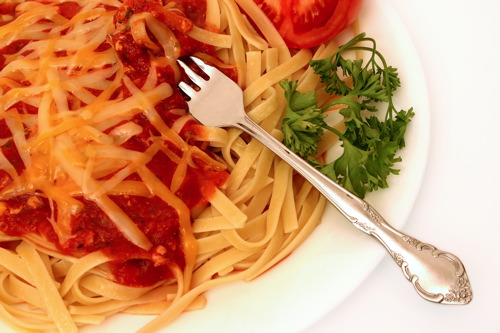
The typical American will see this, and think of Italy, no?
Italy - Italian Pasta

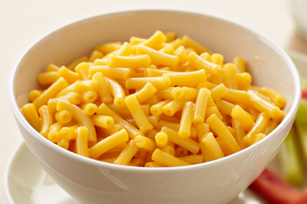
Pasta has strong roots in both of those cultures. There's no denying it. They're not the only nations to make pasta their own, however. What country of origin do you think of when you see this?


As I write, I expect the reader to think of the United States. If you didn't, good for you. Good ol' mac&cheese technically goes all the way back to medevil Italian cookbooks. The image above, however, is Kraft macaroni and cheese.  Kraft - an American company founded in 1903, which began marketing macaroni and cheese in 1937 - made over 645 million dollars from sales of their classic blue box in 2010. Culturally, it's considered a college student staple in Canada (like Ramen in the US).

Mac&cheese may be the brainchild of Italian cooks, but foreign companies have globalized the dish, leading to North Americans and Europeans eating hundreds of millions of dollars worth each year.

Here's a final instance of Pasta Gone Global. Any idea what this is?
Picture of Noodle Kugel Recipe
It's Noodle Kugel, a classic Jewish dish originating in Germany. This method of preparation is unique, and sweeter than most Chinese and Italian recipes. Macaroni and cheese is a prime example of global food adoption. Noodle Kugel is towards other side of the food globalization spectrum: adaptation. Instead of adopting pasta dishes from Italy or China, the Jewish community in Germany adapted pasta. They kept the core ingredient, but cooked it with their own individual culture.

On the whole, pasta has transformed into a global food staple. According to the International Pasta Organization, 27 of the world's nations have citizens who, on average, eat at least 5 pounds of pasta a year. The United States' average is 8.8 lbs. That's higher than butter and peanuts, and almost twice the intake of chocolate.

All of this is very interesting. A quirky flour-water combination, after thousands of years of isolation in China, spread/developed in a rather petite European country during the 13th century. At that time, it was know to those two regions only. In a few hundred years, however, the recipe became a world favorite. Well done, pasta.

What does this mean for our world? For you? For me? As far as I'm concerned, it means that food is a Great Connector. Tonight, I talked about pasta. A different night, I could talk about chocolate, or sausage, or pancakes. Economically, as we saw in the Kraft example, food can jump into a whole new country and start up a multi-million dollar industry. Culturally, a food, like pasta, can spread into different areas and take on whole new forms, like the Kugel I'll be making in the upcoming weeks. Food connects different culture and economies. It makes our Earth an ever more tightly knit - and delicious - place.

Thank you kindly for reading! I hope you check in again next week and see what we can share with you. :)


General pasta facts: http://en.wikipedia.org/wiki/Pasta#History and http://www.britannica.com/EBchecked/topic/445929/pasta
General macaroni and cheese facts: http://en.wikipedia.org/wiki/Macaroni_and_cheese
Kraft data: http://www.journaltimes.com/lifestyles/food-and-cooking/article_8302939e-bdfe-11df-860d-001cc4c03286.html
IPO Statistics: http://www.internationalpasta.org/index.php?cat=22&item=7&lang=2
US Average Intakes Per Capita: http://www.ers.usda.gov/Publications/AgOutlook/AOTables/CurrentTables/AoTables.pdf
Noodle Kugel (picture, plus a recipe!): http://www.foodnetwork.com/recipes/food-network-kitchens/noodle-kugel-recipe/index.html
Italian Pasta: http://www.bestourism.com/items/di/1068?title=Italy&b=209
Chinese Egg Noodles With Smokes Duck (picture and recipe!): http://www.epicurious.com/recipes/food/photo/Chinese-Egg-Noodles-with-Smoked-Duck-and-Snow-Peas-354302
Mac and Cheese: http://mikeythegnarly.wordpress.com/category/munchies/


Friday, November 11, 2011

Globalization Today and the USSR Yesterday

Cześć wszysty! This is Nell, and I'm still in Poland! Therefore, I'd like to focus this blog post on globalization today (in Central/Eastern Europe, specifically Poland). After all, I am experiencing it firsthand! Although, I will certainly try to include certain historical aspects from the USSR's impact on Eastern Europe.

Let's start with obvious examples of globalization today, and I'll focus this blog post on business. Many of America's typical business ideologies are slowly but certainly coming into this country. I was talking to a family friend just last night, and she mentioned how at one point, there were far more of the family-owned-like businesses just a few years ago. Now, however, all sorts of grocery super stores are opening left and right. There are Biedronka's, Lidl's, Kefirek's, Polo Market's, Carrefour's, and many others. Unfortunately, it's far easier to go to one super store and get all of your groceries as opposed to going from a butcher, to a bakery, to a fruit stand, and so on and so forth. Instead, at a super store, you go in, sometimes, if you're lucky, you run into someone willing to help you, and then you leave. Smaller businesses don't have the means to compete with these sort of stores if people lose the willingness to go through the various stores. Aside from that, I have seen a few American fast food chains, such as the obvious McDonald's, the somewhat surprising KFC's, and even a Burger King. Let me say, though, it's quite interesting how each chain adapts to it's local conditions. Let's look at the McDonald's in Krakow's square. You don't use cars to get around in the square; you walk. Therefore, the McDonald's has adapted by creating what I have dubbed a "walk-by" as opposed to a "drive-thru."

Now onto the lasting impacts from the USSR! I actually have a lot of prime examples of this from my stay here and through discussion with people, so it's a bit hard to just pick one specific point right now. But, I'll start with the religious impact. Religion and Communism do not mix. Therefore, all the countries under the Soviet sphere were often pressured to completely abandon their religion. Each country reacted differently to these pressures. Many of the Germans in my class have mentioned the difference between West and East Germany. In West Germany, many old Christian traditions and holidays have held through, and many topics are still taboo to discuss. However, East Germany has lost many of its Christian ties and have begun to recognize more secular holidays as opposed to the Catholic ones. In Poland, Russia had many troubles trying to restrict religion. For example, in the city of Nowa Huta (I will discuss this in more detail at a later time), the citizens placed a wooden cross in the middle of the city after much struggle with the government. Three years after this placement, the government tore it down, and the town rioted. In response, the government permitted the city to fund the building of a church. The architect in charge of this project designed a church in the structure of an ark, and he made the cross at the top of the building the foundational support for the entire building to prevent the Soviets from destroying the cross yet again. Here you see the absolute will power to ensure that the Communist regime would not shake their faith. Although, the Communists did partially succeed in hurting their faith. Here's an example of why: when Pope John Paul the II visited Poland, many many people came to listen to him. However, when he visited Ireland, the number of attendees was double that in Poland. Therefore, Communism certainly did have enough of an effect on religion in Poland.

Thanks for tuning in this week! :)

Sunday, October 30, 2011

Deutschland ist Wunderbar!

Hey, it's Frances!

During the month of October, The Commons at Vanderbilt hosted "Do Deutsch," which consisted of  many events to celebrate and encourage people to learn about Germany. At one of the events, Dr. Hans- Ulrich von Schroeter, German Embassy, spoke about Multikulturellegesellschaft [Multicultural Society]  in Deutschland [Germany]. He described immigration in the New Germany, which happened after the Berlin Wall was destroyed.   He went into detail about the importance of integrating into new cultures when a person moves to a different country, or when a country divided becomes one, such as after the Berlin Mauerfall.  I agree that when you move to a different place, it is important to make an effort to become a part of the culture in order to broaden your view of the world, allow for different experiences and possibly even change your perspective on a certain idea. I think one great way to taste a bit of a culture is to try out the different regionally specific foods that are there, since cultural foods tend to vary widely within certain areas, and I really love food. For example,I have been told that the best tasting Döner Kebabs are made  in Germany, but the food item is actually Turkish. I had never heard of  Döner Kebabs until I started learning about the German culture. When I visit Deutschland, it will be one of the first foods I will taste. However, this may not turn out well since I had a bit of a hard time transitioning into the different taste of foods when I migrated to the United States over 12 years ago. Thankfully with time, this taste bud shock diminishes, and you get used to the types of food available in a certain region. 

Trade and Globalization


Hello all. I am Xaralambos, And I will be your blog author for this week.
Over the next few months, I will be attempting to analyze the globalization of trade. Globalization describes how many different cultures interact with each other. One of the myriad of ways they interact is through trade. One culture trades goods with another culture, and through that interaction the two cultures are irreversibly changed. I will start by examining the effects of trade between ancient societies, such as the ancient Greeks, Romans, Phoenicians, and Egyptians. Following that, I will continue by analyzing the trade routes between peoples, and the changes in said people's culture as they continued to trade and grow. After this I will examine more modern trade routes and the phenomena that occurred as a result between more modern societies, and analyze the similarities between said phenomena and the phenomena that occured when the ancient societies encountered similar circumstances. Using the similarities observed, and the differences in reactions under similar circumstances, I hope to observe and, maybe not predict, but note similarities between current events concerning global trade and globalization. 
 Alright, That's All for tonight. I apologise for the skeletal post, but I do intend to expand on this pitiful post later in the week, after the tests have had their way with me. Hopefully this bottle of wine will help sway them.
This is Xaralambos, Signing off.

Monday, October 24, 2011

The Globalization of Morality

Hello, this is Patrick.
In preparation for my blog post, I began a conversation with the other members of my Mayfield on my proposed topic. It ended up becoming a lengthy debate on the subject of morality in cultures around the world. My topic promptly changed.
The debate revolved around the question of whether morality is innate or learned from society. Whatever one's opinion may be on the subject, anthropology and world history provide a valuable insight into the moral concepts of various people groups throughout time. From the human sacrifices of the Mayans, to the Bacchanalia of the Romans, to the child sacrifice of ancient Canaanite peoples, to the rigid doctrine of the Puritans, to today's postmodernist relative morality, it is safe to say that humanity has failed to come to a consensus on right and wrong or if they exist in the first place. The following discussion will not answer the question but will perhaps shed some light on the subject.
My first statement here is that morality is not part of a human's basic instinct. We do not instinctively do good or evil; we have free will, but with an additional mental construct of what is good and what is evil. If good were an instinct we would not have the option of evil, and vice-versa. As it is, we have instincts as well as an ability to choose between instincts that are often brought into competition.
From here I will assume that certain moral ideas are common to all humans. Principles such as the preservation of one's own species, preservation of one's own life, the valuing of loved ones, etc. are not reasoned out, they are inherent in everyone who has ever lived. When Buddha came along and presented the Seven-Fold Path, he was not introducing a radical new framework of morality but merely elucidating the ideas that people already have. Jesus Christ taught about loving your neighbor as yourself but this wasn't an original idea. People had been loving others for millennia, simply because they felt that it was right. These great teachers showed people how to more effectively carry out the principles they had already known. Question: What about cultures of headhunting or human sacrifice?
In these cultures, the idea of loving your neighbor looked very different from the concept that western civilization has, but they still esteemed members of their own tribe and hunted down the enemy peoples for the purpose of eating them or sacrificing them. Jesus' teaching of loving your enemies was a new one.
I will also state that since morality is not an instinct or a drive, it can be overridden by other desires. This may seem obvious, but it has implications. Of course our desires for selfish gain can overpower our desire to do what is good. What I am saying is that each culture takes the integrity of its moral code upon itself over time. Each culture can shift its focus from monogamy to polygamy, perhaps based upon the lust of its men for more women. Here, the self is overriding the moral tendencies. Cultural deviations from what might be considered "standard moral practices" occur over time as its leaders make good or bad decisions that may or may not be influenced by their selfish desires. Tribal religions can cause new moral rules that are spawned because of one man's desire to rule over his peers through the influence of a supposed deity. This then leads to other practices such as child sacrifices or orgies or whatever one sees in historical cultures. This is the case of people interpreting innate moral concepts in various ways throughout time.

How does this apply to the 21st century? Is there a case to be made for morally equivalent cultures? Hitler has to be mentioned at least once in any blog. I'll go ahead and say that his culture was morally inferior to ours. However, on what basis do we condemn the evil of other cultures? Our moral concepts were shaped over time as people made decisions about moral interpretations of certain logical principles. I think it is important to find principles in this and decide what really is right and what really is wrong. What ideas are innate to everyone? How does rationality enter the picture? Relativism only hurts the cause by taking away any basis for judging other cultures. When one can't judge other cultures, one loses the ability to judge individuals, and thus a justice system becomes impossible. I don't have an answer here, but someone should do something soon. Morality is arguably the most important issue confronting humanity today and pushing it to the side with relativism and situational ethics will not help.